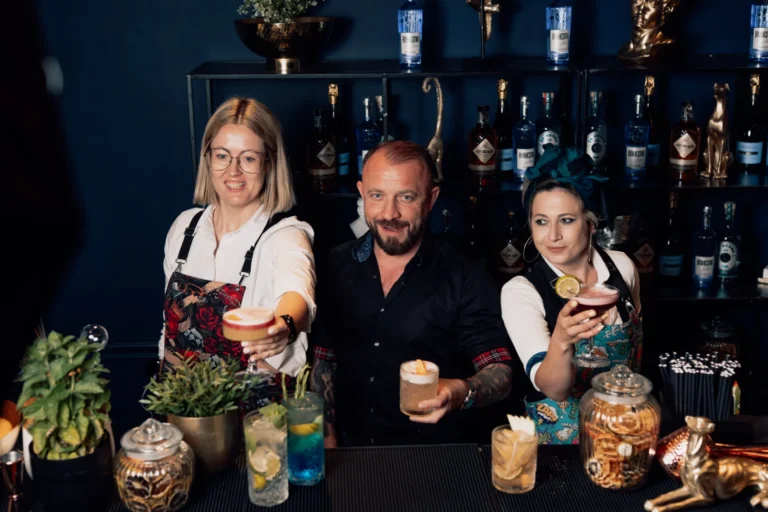
Course: Bartender II degree

Who is this course for?

for bartenders who already know the basics and want to reach the managerial level

for future bar managers and bartender team managers

for people planning to run their own bar or bartending agency

The course in brief

A comprehensive course preparing you for the role of Bar Manager – combining team management, mixology, finance, operations, and developing your own bartending business

Practical training including offer creation, calculations, cost management, event logistics, client negotiations, and agency branding.

Duration: 5 days (40 hours)

Form: on-site lectures, workshops, case studies, simulations

Result: ready-made sales strategy, ability to run effective campaigns, ability to create sales offers, negotiation skills, certificate of completion

What will you gain?

Training
Bartending for You

Here's what we'll teach you:

how to acquire customers
how to price services
mobile bar logistics
event agreements and contracts
promotion of agency services

Sign up
just now!

Training Program: Bar Manager – Bartender 2nd Degree + Bartending Agency

Time: 5 days (40 hours)

Form: lecture, workshops, case study, simulations, practical exercises

Target group: experienced bartenders and future bar managers, people planning to start their own bartending business

Objective: Understand leadership roles and responsibilities within a bar and agency.

  • 09:00 – 09:30 – Training opening, goals, networking.
  • 09:30 – 10:30 – Bar manager vs agency owner – differences and similarities.
  • 10:30 – 11:15 – Building authority – a leader in the venue and at events.
  • 11:15 – 11:30 - Break.
  • 11:30 – 13:00 – Recruitment and onboarding – bar staff and event freelancers.
  • 13:00 – 14:00 – Lunch break.
  • 14:00 – 15:30 – Team training and development – ​​bar, events, multitasking.
  • 15:30 – 15:45 - Break.
  • 15:45 – 17:00 – Difficult situations – conflicts within the team, handling difficult event clients.
  • 17:00 – 17:30 – Summary of the day, reflection, implementation plan.

Objective: product knowledge + practical inventory management.

  • 09:00 – 09:30 – Day 1 review, questions.
  • 09:30 – 11:00 – Alcohol studies – distillates, liqueurs, selecting alcohol for events.
  • 11:00 – 11:15 - Break.
  • 11:15 – 13:00 – Classic cocktails – bar service vs event service.
  • 13:00 – 14:00 – Lunch break.
  • 14:00 – 15:00 – Homemades – bitters, syrups, cordials; when they are profitable.
  • 15:00 – 15:30 – Loss prevention – recipes, prebatching, FIFO, portion control.
  • 15:30 – 15:45 - Break.
  • 15:45 – 17:00 – Practical workshop – creating a mini cocktail menu for a mobile event.

Goal: creating a profitable offer and managing logistics.

  • 09:00 – 09:30 – Discussing homework.
  • 09:30 – 11:00 – Creating a menu – venue vs. event (customer-specific, seasonal).
  • 11:00 – 11:15 - Break.
  • 11:15 – 13:00 – Cooperation with suppliers – alcohol, equipment, mobile logistics.
  • 13:00 – 14:00 – Lunch break.
  • 14:00 – 15:00 – Inventory and loss control – stationary bar vs. event bar.
  • 15:00 – 15:30 – OS&E – purchase of equipment, mobile bars, event glass.
  • 15:30 – 15:45 - Break.
  • 15:45 – 17:00 – Ergonomics and bar design – how to design a stationary and mobile bar.

Objective: knowledge of legal obligations and building your own agency.

  • 09:00 – 09:30 – Revision of material, questions.
  • 09:30 – 11:00 – Licenses and permits – sale of alcohol on premises and at events.
  • 11:00 – 11:15 - Break.
  • 11:15 – 13:00 – Law in the catering and events industry – contracts with employees and clients, GDPR.
  • 13:00 – 14:00 – Lunch break.
  • 14:00 – 15:30 – HACCP, GHP, GMP – responsibilities of the venue and event agency.
  • 15:30 – 15:45 - Break.
  • 15:45 – 17:00 – How to run a bartending agency – business models, service portfolio (weddings, corporate events, bar rentals).
Cel: creating your own bar/agency business plan.
  • 09:00 – 09:30 – Revision of material.
  • 09:30 – 11:00 – Food & beverage cost – calculation of premises and event costs.
  • 11:00 – 11:15 - Break.
  • 11:15 – 13:00 – Bar trends – low&no alcohol, sustainability, coffee in cocktails, zero waste.
  • 13:00 – 14:00 – Lunch break.
  • 14:00 – 15:30 – Bar and agency marketing – social media, themed events, cooperation with influencers, B2B.
  • 15:30 – 15:45 - Break.
  • 15:45 – 17:00 – Practical exam:
  • – cocktail and food cost calculation,
    – simulation of negotiations with a client for an event,
    – conflict resolution within the event team.
  • 17:00 – 17:30 – Individual feedback, presentation of certificates, agency business plan.

Sign up
today!

Don't have time to fill out the form? Call us and we'll add you to the next training date!

Consumables
training

  1. Bar and Agency Manager's Handbook – responsibilities, checklists, business models.
  2. Excel for beverage/food cost + event pricing.
  3. Menu templates – stationary and event bar.
  4. Operational checklists – mise-en-place, orders, inventory.
  5. Contract templates – with suppliers, employees and event clients.
  6. HACCP procedures for bar and event catering.
  7. Bartending Agency Marketing Plan – campaign examples, service price list.

Effect final:

The participant leaves not only as a complete Bar Manager , but also as a person ready to run his/her own bartending agency :

knows the law, finances and procedures
can build a stationary and event team
knows how to calculate and price services
can acquire clients and build the agency's brand

FAQ
frequently asked questions and answers

Level II bartending courses are for those who have already mastered the basics and want to expand their skills. These include beginner bartenders and other professionals in the food service industry.

The Level II bartending course curriculum includes mixology, product knowledge, and topics in HR, finance, law, and marketing. Participants also have the opportunity to strengthen their leadership skills and learn industry procedures.

The Level II Bartending Course introduces the ins and outs of the industry and significantly expands on topics related to customer service, service pricing, mobile bar logistics, event contracts, and promoting agency services. This comprehensive training provides comprehensive preparation for the bartending and business ownership profession.

The Level II bartending course culminates in the creation of a business plan for a bar or bartending agency. Participants prepare cost estimates, learn about bar trends and marketing, and pass a practical exam consisting of three parts: cocktail and food cost calculation, simulated negotiations with a client for an event, and conflict resolution within an event team.

Yes, if you pass the practical exam, you will receive a certificate confirming your acquired skills and preparation for the profession of a bartender or bar or agency owner.

Sign up
today!

Don't have time to fill out the form? Call us and we'll add you to the next training date!